
Defendant RightsBy CourtLinked Published Oct 12, 2026 9 min read
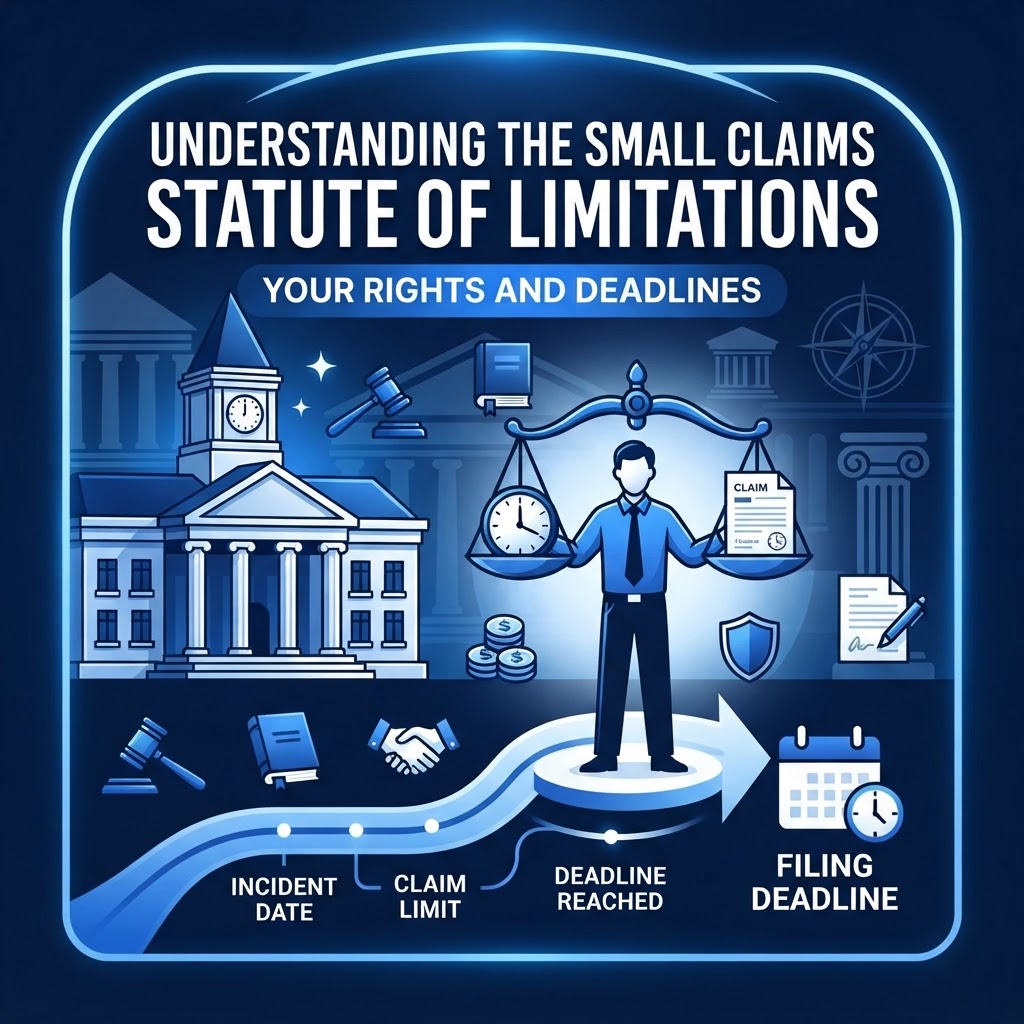
Understanding the Small Claims Statute of Limitations: Your Rights and Deadlines
Don't let an expired claim catch you off guard. Learn how the statute of limitations works in small claims court and what you need to know if you are being sued for an old debt or obligation.
Understanding Legal Deadlines for Small Claims Defendants The statute of limitations dictates the maximum timeframe within which a plaintiff can legally initiate a lawsuit against you. If a creditor or individual attempts to file a claim after this legal window has closed, the court is generally required to dismiss the case, provided you proactively raise the defense of the expiration of the statute of limitations. This legal concept is designed to prevent plaintiffs from filing claims years after evidence has gone missing or witnesses have moved away. It ensures fairness by requiring that legal disputes be resolved while records are still accessible and memories are relatively fresh. If you are served with a notice to appear in small claims court, your first action must always be to verify if the claim itself is timely according to state law. ## The Legal Framework of Limitations Every state sets specific time limits for different types of legal actions. These are codified in state statutes of civil procedure. For instance, in California, the Code of Civil Procedure Section 337 sets a four-year limit for lawsuits based on written contracts, while oral contracts are limited to two years under Section 339. It is critical to note that these deadlines are not suggestions. They are rigid procedural barriers. When a statute of limitations expires, the debt or claim becomes time-barred. This does not mean the debt disappears, but it does mean the plaintiff loses the legal power to compel payment through the court system. In New York, for example, the Civil Practice Law and Rules Section 213 typically provides a six-year statute of limitations for contract actions. Conversely, Texas uses a four-year limit for both written and oral contracts under the Texas Civil Practice and Remedies Code Section 16.004. Because these laws vary significantly, you must consult the specific statute applicable to your jurisdiction. Filing fees for small claims cases also vary by county and state. In Los Angeles County, the fee to file a claim is $30 for claims under $1,500, increasing to $50 for claims between $1,500 and $5,000, and $75 for claims over $5,000. These fees are set by state statute and local court rules, and they represent the cost of initiating the judicial process. Failure to pay these fees or follow the service requirements can lead to an administrative dismissal, regardless of the merits of the underlying claim. ### How the Clock Begins Ticking The discovery rule is a common source of confusion. In many jurisdictions, the limitation period does not start until the plaintiff discovers, or reasonably should have discovered, the facts constituting the cause of action. For example, if you unknowingly breached a contract, the clock may not start until the plaintiff becomes aware of the breach. Conversely, for debt collection cases, the clock typically begins ticking from the date of the last payment or the date the account first became delinquent. The distinction between accrual dates is vital. An accrual date is the moment the plaintiff gains the legal right to sue. In cases involving property damage, the clock usually starts on the date the damage occurred. In breach of contract cases, the clock starts on the date of the breach. If you are involved in a dispute over a service, the clock often begins when the service was rendered or when the final payment was due. Be aware that some states define delinquency as the day following the missed payment deadline. If a payment was due on July 10, the limitation period may begin counting on July 11. Courts are extremely precise regarding these calculations. Even a single day of difference can result in a claim being dismissed as time-barred or allowed to proceed to trial. ## Navigating Statutes by Claim Type To determine if a claim against you is valid, you must first categorize the dispute. Most small claims cases fall into three categories: contracts, personal injury, and statutory claims. Each carries a different timeline. If you are served with papers, look at the cause of action. A contract dispute might have a generous window of four to six years, whereas a defamation or personal injury claim might expire in as little as one or two years. If you need to file a small claims case as a counterclaim, you must be equally aware of your own deadlines to avoid losing your right to seek damages. Personal injury claims, governed by statutes of limitations for torts, often have shorter timeframes than contract claims. In many states, you have only two years from the date of the incident to file a personal injury lawsuit. Statutory claims, such as those involving violations of consumer protection laws, often have even shorter windows, sometimes lasting only one year from the date of the violation. When you are served, the court papers will usually list the cause of action, such as breach of contract or negligence. You should match this description against your state code to see if the timeframe has passed. For example, in many states, an action for a debt on an open account, such as a credit card, has a shorter limitation period than a formal written contract. Researching these nuances is the first step in preparing your defense. ## Worked Example of an Expired Debt Claim Consider a scenario where a local vendor claims you owe them for a service completed on June 1, 2018. The contract was a simple oral agreement. In a state with a two-year statute of limitations for oral contracts, the deadline for the vendor to file a lawsuit would have been June 1, 2020. If the vendor files a claim in January 2024, the claim is clearly time-barred. Even if the vendor insists you still owe the money, the court will likely dismiss the claim entirely because the 43-month delay exceeds the two-year legal window. You would present this timeline in your response to the court to have the case thrown out immediately. For a second numeric example, consider a written contract for a home repair project signed on March 15, 2017. The project was completed on May 1, 2017. If the governing statute of limitations for written contracts in that state is four years, the deadline to file suit was May 1, 2021. If the contractor files a claim on August 15, 2022, the claim is time-barred by 15 months. Even if the contractor claims that they sent you an invoice in July 2022, the filing of the lawsuit itself must occur before the expiration of the statutory period. Because the lawsuit was filed well after May 1, 2021, the court would grant a motion to dismiss based on the statute of limitations. The date of the last invoice is irrelevant once the legal expiration date has passed. ## Step-by-Step Procedure to Defend an Expired Claim 1. Confirm the filing date: Review the court papers to identify when the case was officially filed with the clerk of the court. Do not rely on the date listed on the envelope or the date you received the service. The filing date is when the court clerk stamped the complaint. 2. Research the specific statute: Identify the governing code section in your state that applies to the specific type of claim being brought against you. Search online for your state's code of civil procedure and look for the chapter on limitation of actions. 3. Gather your documentation: Collect proof of the original transaction date, such as receipts, bank statements, or emails. If you paid by check, the date of the cleared check is strong evidence of when an account was last active. 4. Prepare your response: File a formal response or an answer to the claim. You must explicitly mention the statute of limitations as an affirmative defense. If you fail to state this defense, the court may rule that you have waived it, and the court may proceed as if the claim were timely. 5. Attend the hearing: Bring copies of your evidence and a marked calendar or timeline. Politely explain to the judge that the claim was filed after the statutory expiration date and request a dismissal. Ensure you have three copies of all documents: one for the judge, one for the plaintiff, and one for your personal files. ## Essential Evidence Checklist When challenging a claim based on timing, you must provide the court with clear documentation. Relying on oral testimony is rarely sufficient. Gather the following: * Original dated contracts or signed agreements. * Bank statements showing the date of the last payment made. * Written correspondence, such as emails or letters, that confirm the timeline of the dispute. * A printout of the relevant state statute that shows the current limitation period. * Proof of service documents that indicate exactly when the plaintiff initiated the legal action. * Any notices of default or collection letters that predate the lawsuit, which often contain dates identifying when the account was first considered delinquent. Providing this evidence in a neat, organized binder or folder significantly improves your credibility in the eyes of the judge. If you have evidence that contradicts the plaintiff's timeline, highlight these discrepancies clearly. A judge is more likely to grant a dismissal if you can show a clear, chronological narrative that demonstrates the claim is out of time. ## Five Common Mistakes to Avoid 1. Ignoring the lawsuit: Many defendants assume that because the debt is old, the court will automatically reject it. If you do not appear or file a response, the court may enter a default judgment against you, rendering the statute of limitations defense moot. A default judgment allows the plaintiff to enforce the debt as if it were valid, including potentially garnishing wages or bank accounts. 2. Making a partial payment: In some states, making a partial payment on an old debt can restart the statute of limitations clock. Never pay any amount on an old debt without first confirming whether the debt is time-barred. Even a small payment of $10 can be interpreted as an admission of liability in some jurisdictions. 3. Acknowledging the debt in writing: Signing a payment plan or writing a letter admitting the debt exists can effectively reset the limitation clock in certain jurisdictions. Be extremely cautious about what you commit to paper. If a debt collector calls, ask for written verification of the debt before discussing anything or making any commitments. 4. Failing to raise the defense: You must formally claim that the statute of limitations has passed. If you do not mention it as an affirmative defense in your court filings, the judge may treat the case as if the deadline does not exist. Procedural rules are strict, and judges are often barred from considering defenses that you have not specifically raised in your pleadings. 5. Miscalculating the date: Different states handle tolling differently. Tolling refers to situations where the clock is paused, such as when the defendant leaves the state or is a minor. Always check if any tolling provisions apply to your specific situation. If you were absent from the state for two years, the plaintiff may argue that the statute of limitations clock was paused during that time, effectively extending their window to sue you. ## Proactive Steps for Potential Claimants If you are currently on the other side of a dispute and need to initiate a claim, ensuring you stay within your legal rights is paramount. Using a professional demand letter service can sometimes resolve a dispute before a lawsuit is necessary. However, if legal action is inevitable, review our small claims guides by state to ensure your filing is timely and procedurally sound. Being organized from the start prevents your own case from being dismissed on a technicality. Keep a record of all interactions, document every promise made, and maintain a strict log of when payment became due. If you are waiting on a debt, do not wait until the final month of the limitation period to file your claim. The court system can experience backlogs, and you do not want your case to be dismissed because the clerk's office was closed on your final day, or because the process server failed to serve the papers before the statute expired. ## Seeking Further Assistance While understanding the law is vital, the procedural aspects of small claims court can be daunting. From calculating filing fees, which vary by county and can range from $30 to over $100 depending on the amount demanded, to understanding the specific forms required by your local court clerk, there is much to prepare. It is essential to ensure that every document is filed correctly and served according to your state rules. For example, some counties require a specific civil cover sheet in addition to the complaint form. Other jurisdictions mandate mediation before a judge will hear a small claims case. Missing these local steps can result in a case being delayed for months. CourtLinked prepares documents as a paralegal service, is not a law firm, and does not give legal advice. By utilizing a service that understands the nuances of local court requirements, you can ensure that your defenses are clearly presented and that your documentation is formatted to meet the specific standards of your local judiciary. Whether you are defending against an old claim or pursuing a valid one, accuracy in your filing is the first step toward a successful resolution in small claims court. Legal procedures are defined by precise language and rigid schedules; treating them with the gravity they deserve is your best protection in the courtroom.
C
CourtLinked
Last reviewed Nov 4, 2026 · Preparing and filing across all 50 states since 2004. Not a law firm, no legal advice. Editorial standards
Related CourtLinked services
Need help filing your small claims case?
File My CaseRelated State Guides
Related Articles
More guides from the CourtLinked Law Library on similar small claims topics.
Defendant RightsWhat Evidence Do You Need for Small Claims Court? A Complete GuideRead article →Defendant RightsHow to Sue for Breach of Contract in Small Claims Court: A California GuideRead article →GeneralSmall Claims Court Fees and Cost Recovery: A Guide for PlaintiffsRead article →Defendant RightsHow to Write a Demand Letter Before Filing Small Claims in IllinoisRead article →Defendant RightsHow to Handle a Security Deposit Dispute in Virginia Small Claims CourtRead article →Defendant RightsHow to File a Small Claims Case for a Bad Check in IllinoisRead article →