
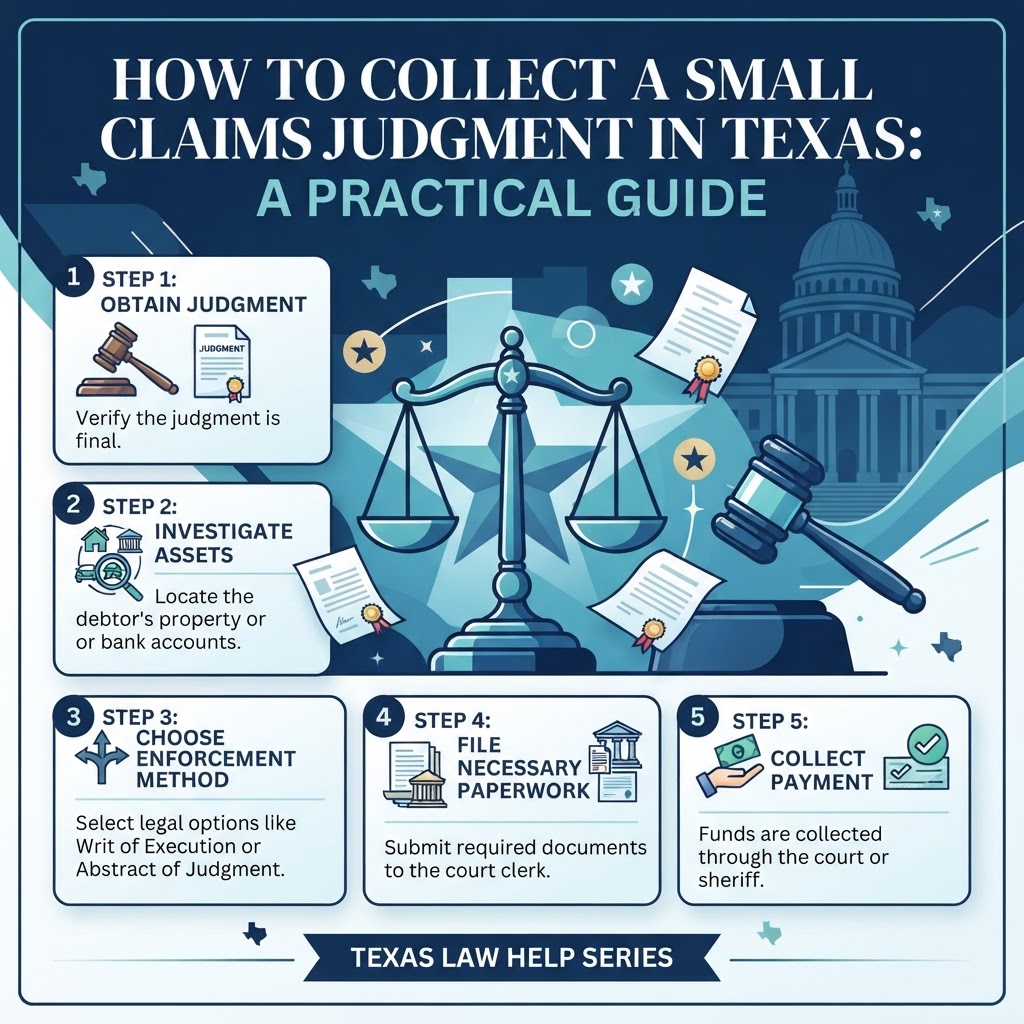
How to Collect a Small Claims Judgment in Texas: A Practical Guide
Winning your small claims case is only half the battle; collecting your money is where the real work begins. This guide outlines the essential steps, from post-judgment discovery to executing collections in Texas.
Winning Your Case is Just the Start
Many plaintiffs celebrate the moment the judge rules in their favor, but in the world of civil litigation, winning a judgment is not the same as receiving a check. If the defendant refuses to pay voluntarily, you must navigate the post-judgment collection process. In Texas, the burden of collection falls on the judgment creditor (you), not the court.
Step 1: Wait for the Deadline
After a judgment is entered in a Texas Justice of the Peace court, the defendant generally has 21 days to file an appeal. During this time, you cannot take aggressive collection actions like garnishment or seizing property. Once this window closes and no appeal has been filed, your judgment becomes 'final' and enforceable.
Step 2: Locate the Debtor's Assets
Before you can collect, you need to know where the money is. If you do not know the defendant's bank account information or place of employment, you can use post-judgment discovery. This includes:
- Written Interrogatories: A formal list of questions the debtor must answer under oath regarding their assets.
- Request for Production: A formal demand to see documents such as bank statements, tax returns, or property deeds.
- Post-Judgment Deposition: A formal oral interview where you can question the debtor about their financial situation.
Step 3: Utilize Texas Collection Tools
Once you have identified assets, you can apply for specific writs to enforce the judgment:
- Writ of Garnishment: Used to freeze and seize money held in a third-party bank account. You must file a separate lawsuit against the bank, naming them as a garnishee.
- Writ of Execution: This authorizes a constable or sheriff to seize non-exempt personal property to sell at auction. Note that Texas has very strong 'homestead' and 'personal property' exemptions, which protect many household items from being seized.
- Abstract of Judgment: You can record an abstract of judgment in the county records where the defendant owns real estate. This creates a lien on the property, meaning the debtor cannot sell or refinance the property without paying you off first.
Common Pitfalls to Avoid
- Ignoring Exemptions: Attempting to seize exempt property (like basic household goods or certain retirement accounts) is a waste of time and can lead to legal penalties.
- Failing to Renew: In Texas, if you do not take action to enforce a judgment within ten years, it can become dormant. You must file for a 'revival' of the judgment if you wish to continue collection efforts.
- Harassment: Even if they owe you money, you must follow the Fair Debt Collection Practices Act. Avoid threats, harassment, or illegal intimidation tactics.
How CourtLinked Can Assist
Navigating post-judgment filings can be complex and intimidating. At CourtLinked, we provide paralegal-managed filing services to help you prepare the necessary legal paperwork accurately and efficiently. Please note that CourtLinked is not a law firm and does not provide legal advice; our role is to assist with the administrative burden of filing your documents so you can focus on your recovery.
Practical Tips for Success
- Be Persistent: Collecting is often a game of patience. If the debtor is currently unemployed or 'judgment proof,' revisit the status in six months to a year.
- Keep Records: Document every interaction and every dollar spent on filing fees; these costs are often recoverable from the debtor.
- Request a Debtor’s Exam: If the debtor ignores your discovery requests, ask the court to hold a debtor’s examination where the judge orders the defendant to appear and disclose their finances.
By following these steps and staying organized, you increase your chances of turning your piece of paper into actual compensation. Always consult the local rules of your specific Justice of the Peace court to ensure you are following the correct filing procedures.
Need help filing your small claims case?
File My Case