
Small Claims Limits: How Much Can You Sue For in Washington State?
Curious about the maximum amount you can sue for in Washington small claims court? Learn about state-specific limits, eligibility requirements, and how to navigate the filing process effectively.
Understanding Small Claims Limits in Washington State
When you are dealing with a financial dispute, understanding the jurisdictional limits of small claims court is the first critical step. Small claims court is designed to be an accessible, simplified venue for resolving civil disagreements without the need for expensive attorney fees. In Washington State, these courts operate under specific rules regarding the amount of money you can claim.
The Monetary Cap in Washington
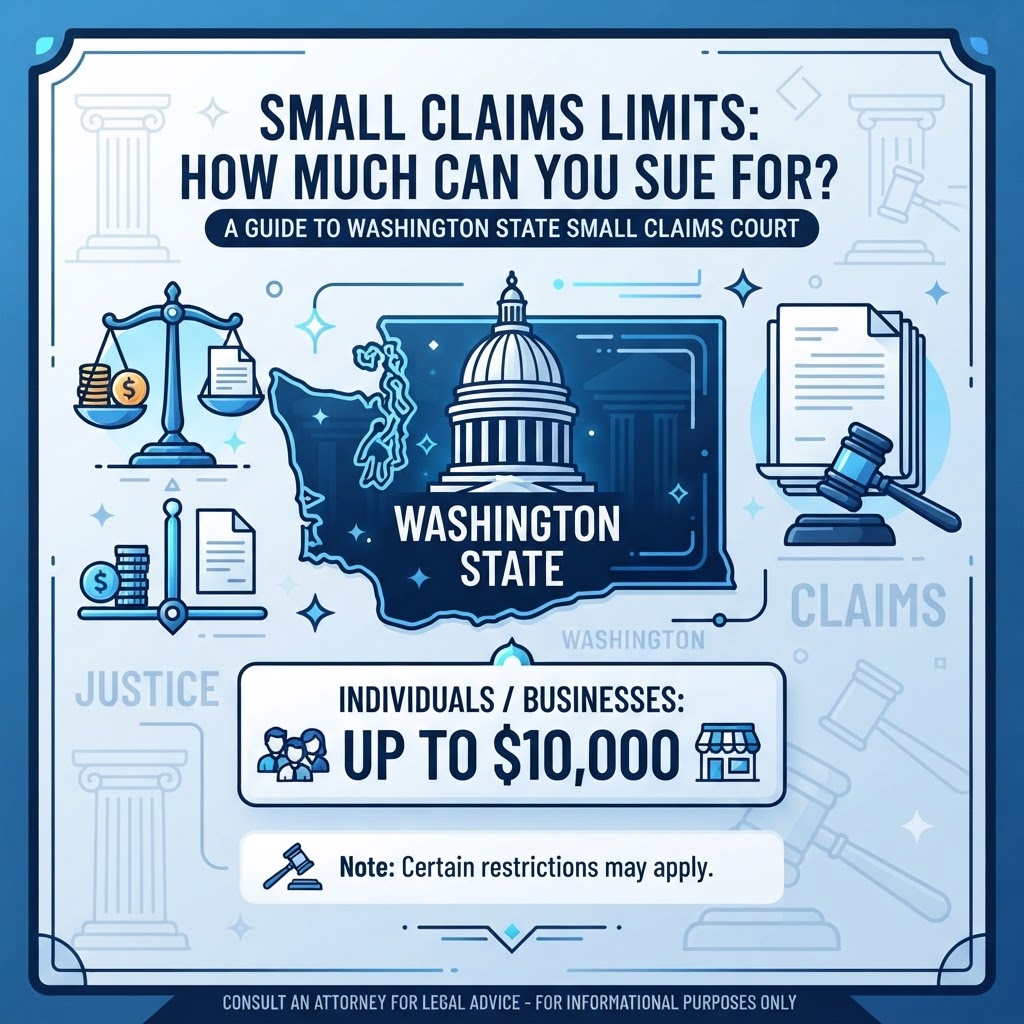
In Washington, the maximum amount you can sue for in small claims court depends on the identity of the plaintiff:
- Individuals: If you are an individual suing on your own behalf, the jurisdictional limit is $10,000.
- Businesses: If you are a business, corporation, or partnership, the limit is $5,000.
It is important to note that these limits exclude court costs and interest that may accrue, but they represent the hard ceiling for the principal damages you are seeking. If your claim exceeds these amounts, you generally have two choices: waive the excess amount to remain in small claims court or file a standard civil suit in a higher court, which typically involves more complex procedures and costs.
Why Small Claims Limits Matter
Small claims courts function as 'courts of limited jurisdiction.' This means the judge is only empowered to hear cases up to a certain financial threshold. If you attempt to sue for an amount higher than the limit, your case will likely be dismissed or transferred to a Superior or District Court, where formal rules of evidence and civil procedure apply.
Can You Split a Claim?
A common strategy that many attempt is 'splitting' a large claim into two separate lawsuits to bypass the limit. In Washington, this is generally not allowed. Courts view this as an attempt to circumvent jurisdictional rules. If you have a claim worth $15,000, you cannot file two $7,500 claims; you must either accept the $10,000 limit or pursue the matter in a higher court.
How to Calculate Your Damages
Before you file, you must accurately calculate your damages. You cannot simply pull a number out of the air; you must provide evidence for every dollar you claim. Consider the following components:
- Direct Losses: Actual out-of-pocket expenses (e.g., repair costs, unpaid invoices, or security deposits).
- Contracts: Amounts owed under a written agreement.
- Damages to Property: Quotes from licensed professionals showing the cost to restore property to its original condition.
Common Pitfalls to Avoid
- Over-calculating: If you exaggerate your claim, you lose credibility with the judge. Always provide receipts or contracts to back up your figures.
- Ignoring Statutes of Limitations: Even if your claim is under the $10,000 limit, you will lose if the statute of limitations has expired. In Washington, the limit for written contracts is generally six years, while oral contracts are three years.
- Failure to Demand Payment: Always send a 'Demand Letter' before filing. A judge will want to see that you made a good-faith effort to resolve the dispute outside of court.
Preparing Your Case
Once you have determined that your case fits within the monetary limits, follow these steps to prepare:
- Gather Evidence: Collect emails, texts, contracts, photos, and witness statements.
- Identify the Defendant: Ensure you have the correct legal name and address of the person or business you are suing.
- File Your Claim: You must file in the appropriate district court. If you are uncertain about the paperwork or the filing process, services like CourtLinked can assist you.
How CourtLinked Can Help
Navigating the bureaucratic side of the court system can be overwhelming. At CourtLinked, we provide paralegal-managed filing services designed to save you time and stress. Please note that CourtLinked is not a law firm, and we do not provide legal advice or strategy. We handle the administrative heavy lifting to ensure your documents are formatted correctly and filed according to local court requirements, allowing you to focus on your case.
Final Thoughts
Small claims court is a powerful tool for everyday people, but success requires adherence to the rules. By staying within the $10,000 (individual) or $5,000 (business) limit in Washington and preparing your documentation thoroughly, you increase your chances of a favorable outcome. When you are ready to start, remember that organized paperwork is the foundation of every winning argument.
Need help filing your small claims case?
File My Case