
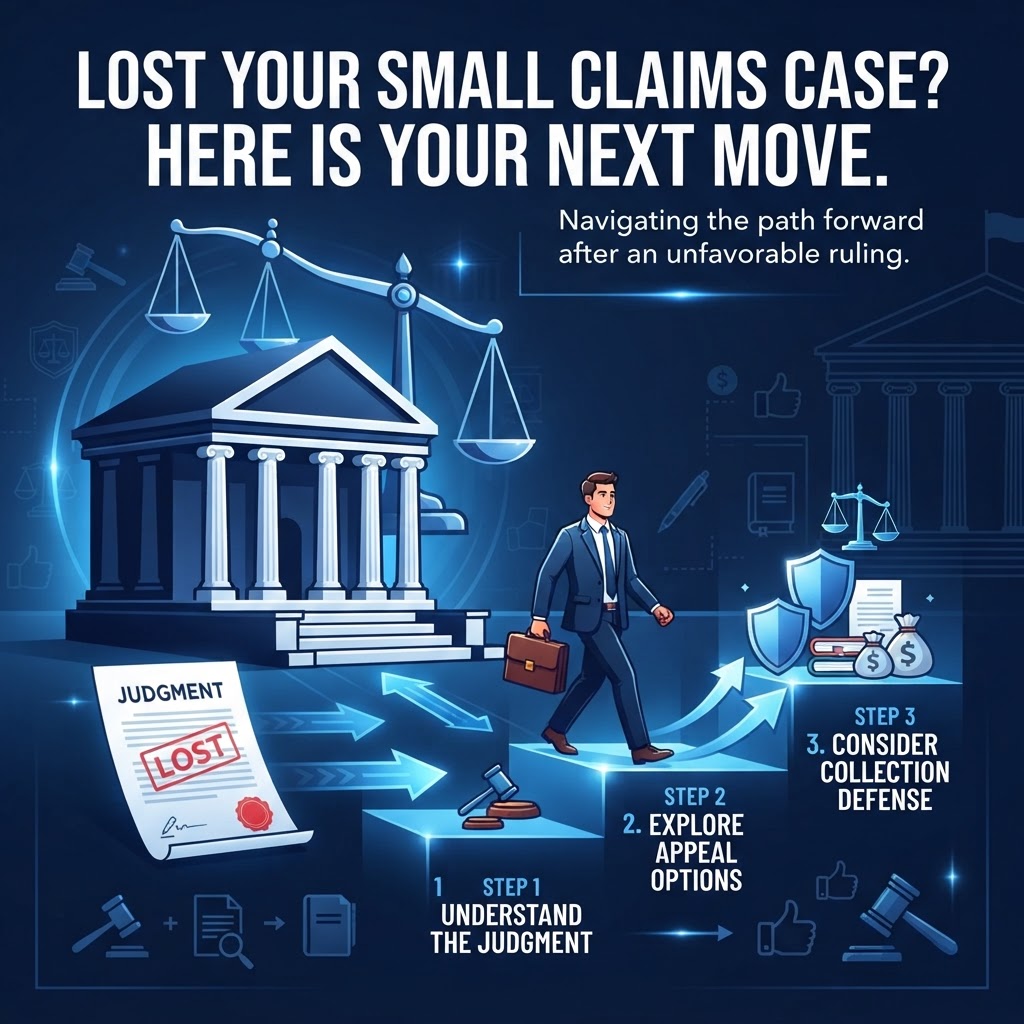
Lost Your Small Claims Case? Here is Your Next Move
Receiving an unfavorable judgment in small claims court can be discouraging, but your legal options are not necessarily over. This guide covers how to evaluate your situation, file an appeal, and handle the post-judgment process effectively in states like Ohio.
Understanding the Reality of a Loss
Losing in small claims court is a stressful experience, but it is important to remember that it is not necessarily the end of the road. Whether you are a plaintiff who had your claim dismissed or a defendant ordered to pay, the judicial system provides specific mechanisms to challenge decisions if there were legal errors or procedural injustices.
Can You Appeal a Small Claims Decision?
In many jurisdictions, including Ohio, small claims courts are designed to be final. However, this does not mean you have no recourse.
The Ohio Perspective
In Ohio, small claims court is a division of the municipal or county court. Because these proceedings are intended to be informal and swift, the right to appeal is often limited to cases involving a manifest error of law. You cannot simply appeal because you disagree with the magistrate's assessment of the evidence or credibility of witnesses.
Grounds for Appeal
To successfully file an appeal, you generally need to prove one of the following:
- Procedural Error: The court did not follow the proper rules of evidence or trial procedure.
- Lack of Jurisdiction: The court did not have the legal authority to hear the case.
- Legal Error: The magistrate applied the wrong law to the facts presented.
Step-by-Step: How to Challenge a Judgment
If you believe a legal error occurred, follow these steps to explore your options:
- Obtain the Written Judgment: You cannot appeal until the court has issued a final, signed entry. Ensure you have the official documentation from the Clerk of Courts.
- Review the Timeline: Deadlines for appeals in Ohio are strict. Typically, you have 30 days from the date of the judgment entry to file a Notice of Appeal.
- Consult the Record: Since appeals are based on the trial record, you will need a transcript of the hearing. If the court did not record the session, your appeal will be significantly harder to prove.
- Consult with Professionals: While you represent yourself in small claims, an appeal often requires legal expertise.
Note: CourtLinked provides professional paralegal-managed filing services to help you prepare your paperwork accurately. We are not a law firm and do not provide legal advice, but we can ensure your documents meet court requirements.
What if You Are the Defendant?
If you were sued and lost, you may be facing a money judgment. If you fail to pay, the plaintiff may pursue garnishment of wages or bank accounts.
Filing a Motion for Relief
In some instances, if you did not appear in court because you were never properly served notice, you can file a 'Motion to Vacate Judgment.' This requests that the court set aside the decision and grant you a new hearing because the initial process was fundamentally flawed.
Payment Plans
If the judgment is valid and you cannot pay it in full, contact the plaintiff. Often, plaintiffs would rather accept a structured payment plan than deal with the hassle and expense of collection agencies or filing for garnishment.
Common Pitfalls to Avoid
- Missing Deadlines: Missing the window for an appeal or a motion to vacate will result in an automatic forfeiture of your rights.
- Emotional Arguments: Judges and appellate courts rely on facts and law. Avoid focusing on how 'unfair' the situation feels and focus on specific procedural or legal failures.
- Failing to Properly Serve: If you are filing an appeal or a motion, ensure the other party is served properly according to your local court rules.
How CourtLinked Can Assist
Navigating the bureaucratic landscape of the court system is often more difficult than the case itself. At CourtLinked, we specialize in helping individuals manage the complex paperwork associated with court filings. While we are not a law firm and do not offer legal advice, our team of experienced paralegals can assist with the preparation of forms, ensure your filings are formatted correctly, and help you navigate the procedural hurdles of post-judgment motions or appeals.
Summary Checklist
- Did you verify the deadline for an appeal in your specific Ohio county?
- Was a record kept of your court proceedings?
- Are you basing your appeal on a legal error rather than a disagreement over the facts?
- Have you explored the possibility of a payment plan with the prevailing party?
If you have questions about the logistics of filing your next court document, reach out to CourtLinked today. We provide the administrative support you need to ensure your paperwork is filed correctly, the first time.
Need help filing your small claims case?
File My Case