
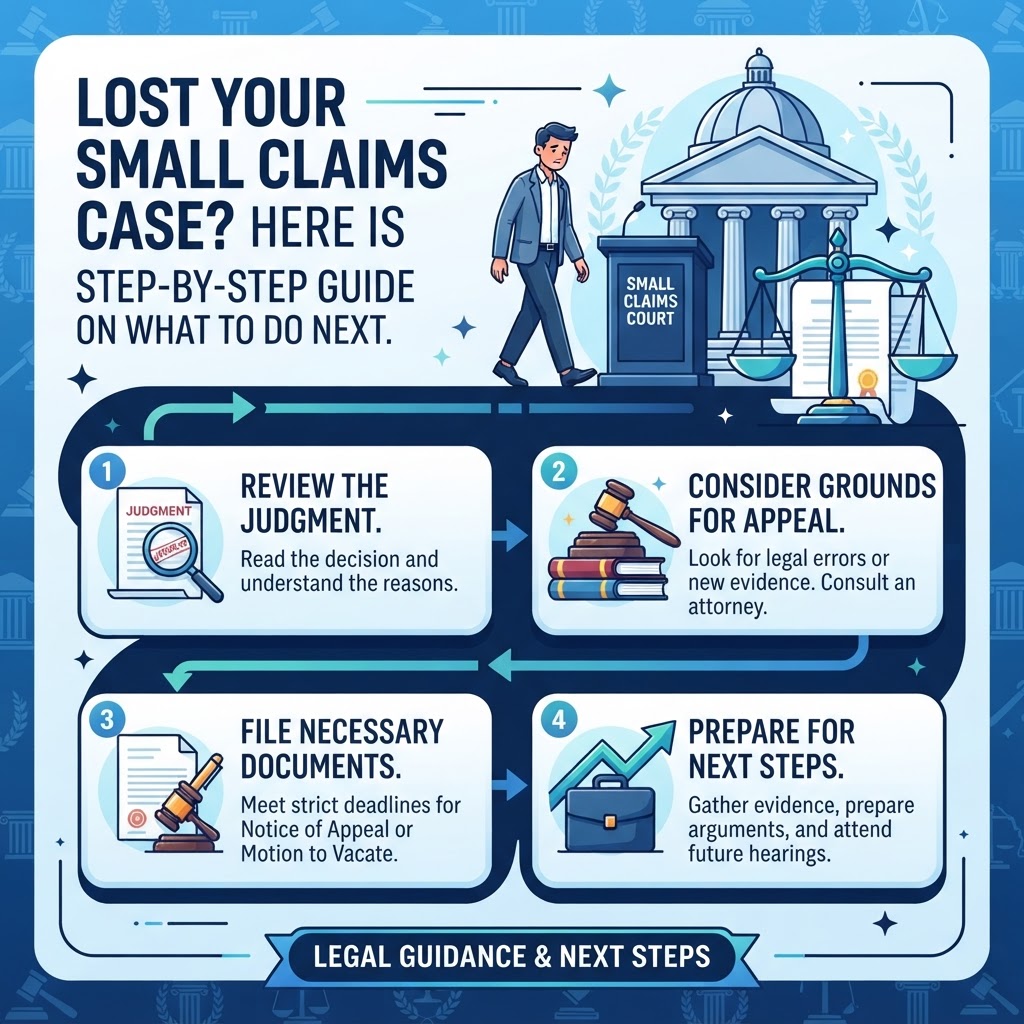
Lost Your Small Claims Case? Here Is Your Step-by-Step Guide on What to Do Next
Losing a small claims court case can feel overwhelming, but it is not necessarily the end of the road. This guide outlines your rights, the appeal process in states like Georgia, and how to evaluate your next legal steps.
Understanding Your Legal Position After a Loss
Receiving an unfavorable judgment in small claims court is a difficult experience, but it is important to remain calm and assess your situation objectively. Losing a case does not automatically mean the end of your legal journey. Depending on the rules of your jurisdiction, you may have specific paths available to challenge the decision or mitigate its impact.
The Reality of Small Claims Judgments
When a magistrate or judge rules against you, they issue a formal judgment. In most states, including Georgia, this judgment is legally binding. However, judicial systems understand that errors can occur. Whether it was a misunderstanding of facts, a procedural error, or new evidence coming to light, the law often provides a narrow window to seek a second look.
Can You Appeal the Decision?
In many states, small claims court is designed for speed and finality, which means the right to appeal is often restricted.
The Georgia Context
In Georgia, the small claims court is officially known as the Magistrate Court. If you lose in a Magistrate Court trial, you generally have the right to appeal the decision to the State or Superior Court of that county.
- The Timeline: You typically have 30 days from the date of the judgment to file an appeal. Missing this deadline usually waives your right to challenge the decision.
- De Novo Review: In many instances, an appeal results in a 'de novo' trial, meaning the higher court treats the case as if it were brand new. You get a fresh start to present your evidence and arguments to a new judge.
- Costs: Keep in mind that filing an appeal involves costs, including filing fees and potentially the cost of a bond to stay execution of the original judgment.
Steps to Take After an Unfavorable Ruling
If you believe the court made a legal error or you have a valid reason for the outcome, follow these steps:
- Obtain the Order: Ensure you have the written judgment from the clerk’s office. Read it carefully to understand the judge's reasoning.
- Consult Local Rules: Every county has slightly different procedures. Visit the official court website for your specific county to read their local rules regarding appeals.
- Assess the Cost-Benefit: Appeals can be expensive and time-consuming. Calculate whether the amount at stake is worth the cost of legal fees, potential bond requirements, and your time.
- Evaluate Procedural Errors: Did the court fail to follow proper notice procedures? Was the judge biased? These are significant grounds for an appeal.
Common Pitfalls to Avoid
- Ignoring the Judgment: Do not simply walk away and hope the debt disappears. An unsatisfied judgment can lead to wage garnishments, bank levies, or liens on property, which can damage your credit score significantly.
- Missing Deadlines: Missing a 30-day appeal window is almost impossible to rectify. Set multiple reminders.
- Attempting to Re-argue Frivolously: Appeals are not just for when you are unhappy with the result. You must demonstrate a legal or procedural error to have a successful appeal.
Settlement: The Practical Alternative
Sometimes, the best strategy after losing is not an appeal, but a negotiated settlement. Contact the plaintiff and discuss a payment plan or a partial settlement in exchange for the satisfaction of the judgment. This can prevent further collection efforts and is often much cheaper than pursuing a formal appeal process.
How CourtLinked Can Help
Navigating the legal system is complex and intimidating. While CourtLinked is not a law firm and cannot provide legal advice or represent you in court, we specialize in helping individuals prepare and file their court documents correctly. Our paralegal-managed services ensure that your filings meet the technical requirements of the court, giving you the best chance of having your documents processed without unnecessary delays.
If you are ready to file an appeal or need assistance with post-judgment documentation, our team is here to assist with the administrative heavy lifting so you can focus on building your case.
Final Thoughts
Losing in court is not a reflection of your personal character, but rather a reflection of the case as it was presented on that specific day. Whether you choose to appeal or negotiate a settlement, take action immediately to manage the outcome. Knowledge of your local court’s procedures is your greatest asset.
Disclaimer: CourtLinked is a document preparation service, not a law firm. We do not provide legal advice, represent you in court, or advocate on your behalf. Please consult with a qualified attorney regarding your specific legal situation.
Need help filing your small claims case?
File My Case