
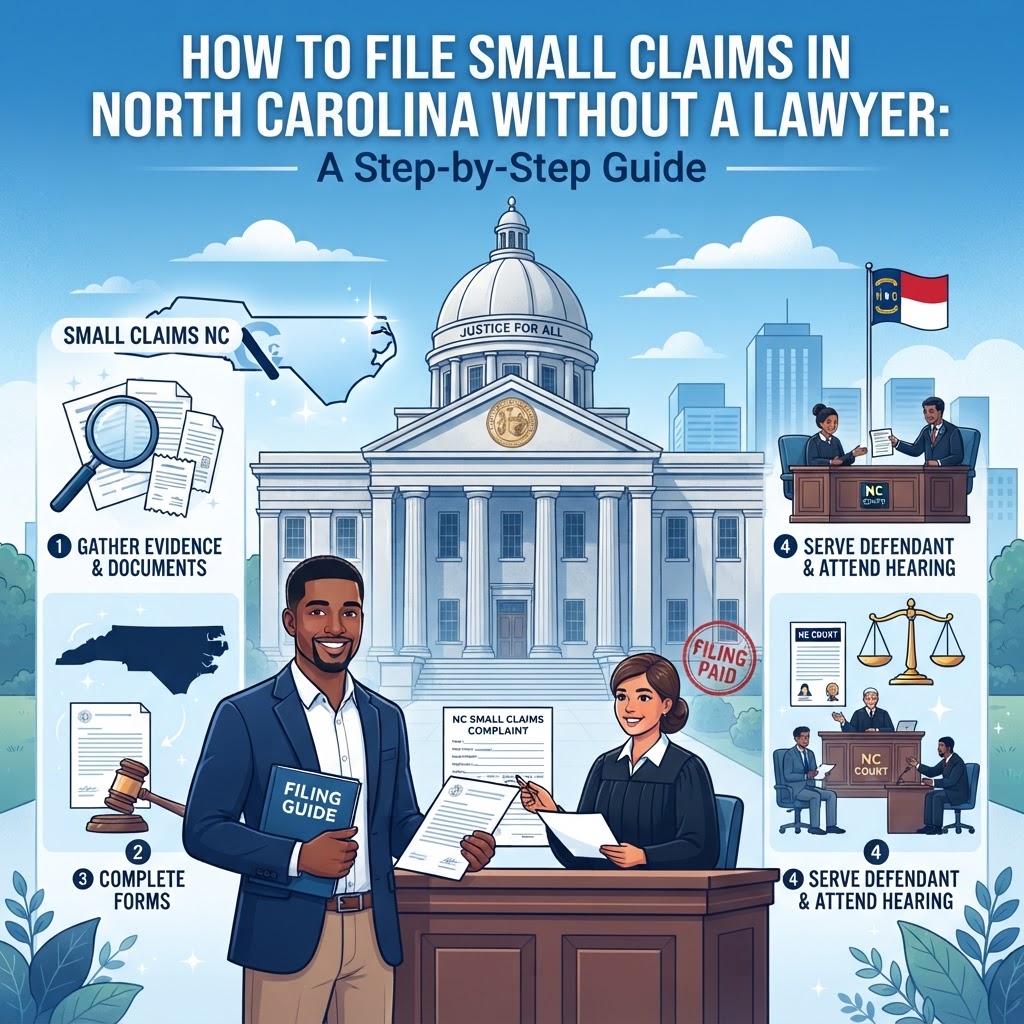
How to File Small Claims in North Carolina Without a Lawyer: A Step-by-Step Guide
Navigating small claims court in North Carolina doesn't have to be overwhelming. Learn how to prepare your case, file your claim, and represent yourself effectively in small claims court.
Introduction to North Carolina Small Claims Court
Small claims court is designed to be an accessible, efficient way for individuals and businesses to resolve minor legal disputes without the need for expensive legal representation. In North Carolina, small claims court handles civil cases involving disputes of $10,000 or less. Whether you are dealing with a landlord who refuses to return a security deposit, a contractor who failed to complete a job, or a debt collection issue, the process is structured to be user-friendly for non-lawyers.
Understanding the Limits and Jurisdiction
Before filing, ensure your case qualifies. In North Carolina, the magistrate court handles cases up to $10,000. If your claim exceeds this amount, you may need to file in District Court, which is significantly more complex and often requires an attorney. You must also ensure you are filing in the correct county—usually where the defendant resides or where the contract was breached.
Step 1: Pre-Filing Preparation
Before heading to the courthouse, organize your evidence. This includes contracts, receipts, emails, text messages, photos of damages, and any other relevant documentation. Write a chronological summary of the events to help you stay organized during the hearing. Remember, the burden of proof is on you to demonstrate that the defendant owes you money or is liable for damages.
Step 2: Filing the Complaint
To initiate your lawsuit, you must file a 'Complaint' form at the Clerk of Court’s office in the appropriate county. You will be required to pay a filing fee, which varies by county and the amount of the claim. Once the paperwork is processed, you must ensure the defendant is properly 'served.' This is typically done through the Sheriff’s office or by certified mail to ensure the court has proof that the defendant received notice of the lawsuit.
Step 3: Preparing for Your Court Date
Your hearing will be held before a magistrate. This is not a formal trial with a jury; it is an informal proceeding where both sides present their arguments.
Common Pitfalls to Avoid:
- Being Unprepared: Arrive with your evidence organized in binders.
- Losing Your Temper: Keep your testimony professional and focused on the facts.
- Missing Deadlines: Ensure all filings are submitted well before the statute of limitations expires.
- Failing to Serve the Defendant: If the defendant is not properly notified, the case cannot move forward.
How CourtLinked Can Assist You
While representing yourself is a common practice, the administrative burden of filing and serving legal paperwork can be daunting. CourtLinked provides paralegal-managed filing services to help you navigate the process. Please note that CourtLinked is not a law firm and does not provide legal advice or strategy for your specific case. We handle the logistical hurdles of filing so you can focus on preparing your evidence and testimony.
Conclusion
Filing a small claims suit in North Carolina is an empowering process that allows you to seek justice for your grievances. By staying organized, adhering to court procedures, and being prepared for your day in court, you can effectively present your case. If you find the paperwork aspect overwhelming, consider reaching out to CourtLinked to streamline the filing process.
Need help filing your small claims case?
File My Case