
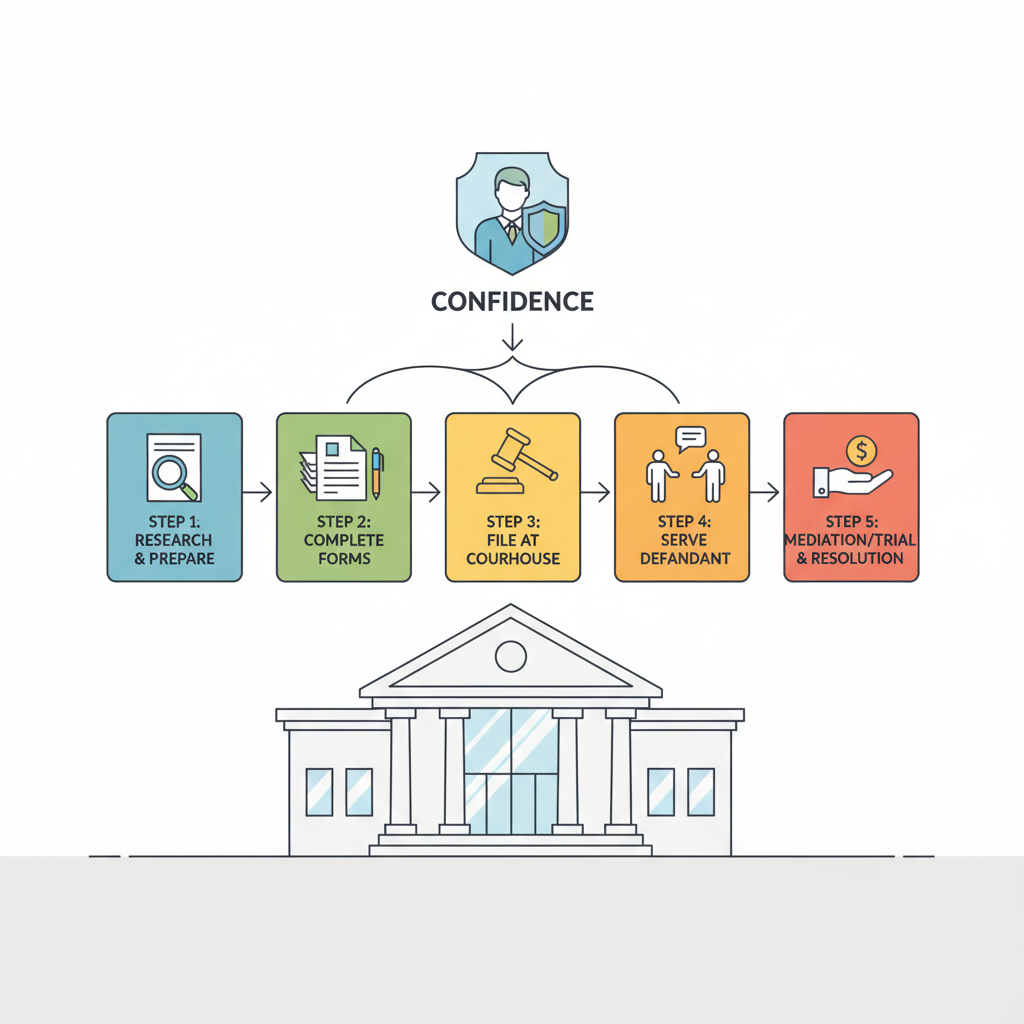
Small Claims Filing – A Step-by-Step Guide
Filing a small claims case doesn't have to be intimidating. With the right preparation and guidance, you can navigate the process confidently and get the resolution you deserve. Here's a straightforward, step-by-step guide to filing a small claims case in the United States.
Step 1: Determine If Small Claims Court Is Right for You
Before filing, confirm that your dispute falls within your state's small claims monetary limit (typically between $2,500 and $25,000). Small claims court is ideal for disputes involving money — not cases seeking injunctions or complex equitable relief.
Step 2: Try to Resolve the Dispute First
Courts generally look favorably on plaintiffs who attempted to settle before filing. Send a formal demand letter to the other party outlining what you're owed and giving them a deadline to respond (usually 10–14 days). Keep a copy — it may be useful in court.
Step 3: Identify the Correct Court
Small claims cases must be filed in the correct jurisdiction — typically the county where the defendant lives or where the dispute occurred. Filing in the wrong court can result in dismissal.
Step 4: Complete the Required Forms
Each state has its own small claims forms. You'll typically need to fill out a plaintiff's claim form that includes:
Your name and contact information
The defendant's name and address
A brief description of the dispute
The dollar amount you're claiming
This is where many people get stuck — forms vary by county and state, and errors can delay your case.
Step 5: Pay the Filing Fee
Filing fees for small claims cases typically range from $30 to $100, depending on the state and the amount being claimed. Some courts offer fee waivers for low-income filers.
Step 6: Serve the Defendant
After filing, the defendant must be formally notified. Acceptable methods of service vary by state but commonly include certified mail, sheriff's service, or process servers.
Step 7: Prepare for Your Hearing
Organize all your evidence — contracts, receipts, photos, emails, and witness statements. Practice presenting your case clearly and concisely. Judges in small claims court appreciate brevity and facts over emotion.
Step 8: Attend the Hearing and Collect Your Judgment
Show up on time, present your evidence, and let the judge decide. If you win, you'll receive a judgment — but collecting it may require additional steps like wage garnishment or bank levies if the defendant doesn't pay voluntarily.
Skip the Confusion — File with Real Paralegals
The filing process has many moving parts, and mistakes can cost you time and money. Courtlinked.com connects you with real paralegals who handle the paperwork, ensure proper filing, and guide you every step of the way. You can file your case nationwide from the comfort of your home.
👉 Ready to file? Visit https://www.courtlinked.com/small_claimez/index.html and get started today.
Need help filing your small claims case?
File My Case