
How to Collect a Small Claims Judgment in Illinois: A Step-by-Step Guide
Winning your small claims case is only half the battle. Learn the essential steps to enforcing and collecting your judgment in Illinois and how to navigate the post-judgment process effectively.
Winning is Just the First Step
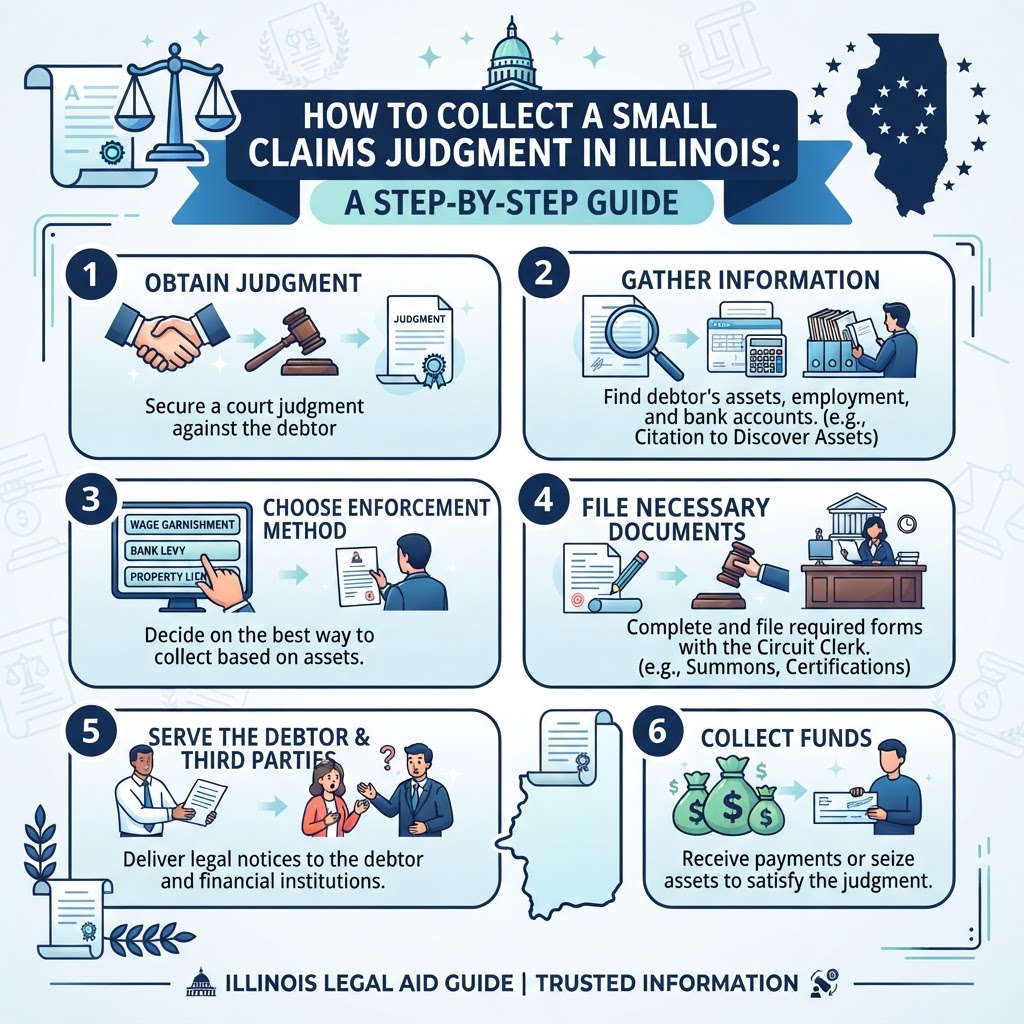
Securing a judgment from a judge in an Illinois small claims court feels like a significant victory. However, the court does not automatically collect the money for you. A judgment is essentially a court order stating that the defendant owes you money, but it is up to you—the judgment creditor—to initiate the collection process.
Step 1: Obtain Your Certified Copy
Before you can begin any collection efforts, you must have a certified copy of the judgment order signed by the judge. Ensure this document is stamped by the Clerk of the Court. This serves as your legal proof that the debt is owed and is required for all subsequent legal actions.
Step 2: Investigation and Asset Discovery
Collecting money requires knowing where the money is. If you do not know the defendant's place of employment or where they bank, you may need to conduct a Citation to Discover Assets. In Illinois, this is a formal legal process where you can compel the debtor to appear in court to answer questions under oath about their financial situation, including property ownership, bank accounts, and employment history.
Step 3: Enforcement Methods in Illinois
Once you have located assets or income, you can pursue several enforcement avenues:
- Wage Garnishment: This is one of the most common ways to collect. You can request a wage deduction order from the court, which requires the employer to withhold a portion of the defendant’s paycheck and send it directly to you until the debt is satisfied.
- Non-Wage Garnishment (Bank Levy): If you know the defendant’s bank, you can freeze their account. The court issues a citation to the bank, which stops the debtor from withdrawing funds, and those funds are eventually transferred to satisfy the judgment.
- Property Liens: You can record your judgment with the county recorder of deeds. This puts a lien on any real estate the debtor owns in that county, ensuring you are paid if they ever sell or refinance the property.
Common Pitfalls to Avoid
- Attempting Illegal Collection: Harassing the debtor or threatening them is not only unprofessional but can lead to legal trouble for you. Always use the court-sanctioned processes described above.
- Giving Up Too Soon: Debtors often wait to see if you are serious about collection. Persistence is key.
- Ignoring Exemptions: Under Illinois law, certain income (such as Social Security or disability benefits) and some personal property are legally exempt from collection. Attempting to seize exempt property can lead to court sanctions.
When to Seek Professional Assistance
Navigating the Illinois post-judgment statutes can be complex. If the debtor is avoiding communication or hiding assets, you may find the procedural requirements for filings and service of process overwhelming.
At CourtLinked, we provide paralegal-managed filing services to help you navigate the paperwork and procedural hurdles of the court system. Please note that CourtLinked is not a law firm and does not provide legal advice or attorney representation. We provide professional assistance in preparing your filings so you can move forward with confidence.
How CourtLinked Can Help
Collecting a judgment is a test of patience. From preparing your initial small claims filing to managing the complexities of post-judgment citations and garnishments, our team at CourtLinked streamlines the process to ensure your paperwork is accurate and submitted correctly according to local Illinois court rules. By outsourcing the administrative heavy lifting, you stay focused on your goal: getting paid. Contact us today to see how we can assist you in your debt recovery journey.
Need help filing your small claims case?
File My Case